
Email us at info@servantfinancial.com to talk to a financial advisor today!

Email us at info@servantfinancial.com

Mid-Year 2023 Review Will History Rhyme This Time?

We are almost halfway through 2023 and economists, investors, and consumers alike are all wondering where the U.S. economy and their investment portfolios are headed. 2023 has been ripe with economic volatility.  Inflation remains an issue globally. Supply chains are being reconfigured to mitigate vulnerabilities manifest during COVID-19 and to secure strategic resources leading to higher production costs. Meanwhile, geopolitical issues (war in Ukraine, trade sanctions against Russia) and government policy responses (sale of oil from the strategic petroleum reserve begetting OPEC/Middle East production cuts) have caused acute volatility in energy prices, first spiking upward in 2022 and then downward as global demand waned.

Earlier this year in the “Speeding Towards the E.R. – Economic Recession,” we discussed that we are likely on the brink of a recession occurring in the next six to twelve months which could have impacts on asset class performance and your investment portfolio. In this issue, we plan to review the current status of the U.S. economy and which asset classes to look to for outperformance as the likelihood of a recession grows.  Some key economic vital signs cited in the previous article were inflation, Federal Reserve (Fed) monetary policy, bank instability, consumer spending and employment statistics. In this mid-year update, we’re going to take a page out of a Mark Twain novel and investigate his adage, “History doesn’t repeat itself, but it often rhymes” and review the current economic and market backdrop from a historical perspective.

High rates of inflation can have adverse effects on the economy as goods and services become more expensive. Rising costs of good, services and capital can slow GDP growth by destroying demand and reducing levels of production and employment. To combat chronically high inflation, the Federal Reserve has continued to raise interest rates. During 2023, after every Fed meeting, interest rates have been raised by 0.25%. The Fed’s current benchmark rate sits at roughly 5.00% – 5.25% which is the highest it’s been in the 16 years since 2007.

Meanwhile, the May inflation report showed the headline consumer price index (CPI) cooling to 4.0% year-over-year (vs. 4.1% expected) with core CPI (excludes volatile food and energy prices) coming in at 5.3% (vs. 5.2% expected). While headline inflation is easing substantially as we lap cycle-high energy prices last summer, we are in the 6th consecutive month with little change in core CPI, which has been stuck between 5.3% and 5.5% since January. In short, inflation remains well above the Fed’s 2.0% target.  This leads us to the Fed’s last meeting in mid-June where the Fed left rates unchanged at 5.25% and inexplicably pausing their aggressive hiking cycle for the first time in more than a year despite Chairman Powell’s hawkish post-meeting rhetoric. Sticky core inflation makes it unlikely that we’ll be seeing any meaningful rate cuts this year, a sentiment communicated clearly by Powell, who pointed out in his “Semiannual Monetary Policy Report to the Congress” that “…inflation pressures continue to run high, and the process of getting inflation back down to 2 percent has a long way to go.(emphasis added)”

The primary purpose behind the Fed raising its benchmark interest rates is to dampen inflation, however, raising rates can lead to a multitude of economic issues, including instability in the banking system. Three major banks, First Republic Bank, Signature Bank, and Silicon Valley Bank, all failed in the spring of 2023 partly due to the Fed’s rapid increase in interest rates. This rate hike cycle, much like similar instances in the past, has caused the yield curve to invert meaning long dated treasury securities have lower interest rates than treasuries with shorter durations. For example, on June 21st the spread between the 10-year treasury rate and the 2-year treasury rate was -0.94% (10-year rate lower than 2-year rate) compared 0.08% a year ago and the long-term average of +0.90%.  Yield curve inversions are usually a harbinger of an oncoming recession.

While one could argue that the failed banks did not effectively managing risk, the inverted yield curve has severely tightened interest margins and profitability in the banking system as a whole. These three bank failures display just how problematic runaway inflation and destabilizing fast-rising interest rates can be on the financial system. Increased interest rates will inevitably lead to slower economic growth. As the cost of borrowing increases, consumers are less likely to take out loans for big ticket purchases like a home, car or other long-duration assets. Moreover, bank lending becomes more restrictive as the focus of executive leadership shifts to profitability, solvency, and avoiding a run on the bank. This decline in consumption and lending contributes to lower overall economic growth and possibly contractions in economic activity or a recession.

On the asset side of the equation, rapidly rising interest rates will prompt investors to consider more stable, higher yielding investment options like treasury bonds and non-convertible debentures (NCDs). Investments such as treasury bonds and NCDs and other fixed income securities have a greater ability to withstand economic uncertainties and provide greater stability and certainty of investor’s return of principal and income.  Fixed income securities offer fixed interest payments which equate to a stable cash yield.  For example, 1-year treasury bills currently yield 5.27% compared to 3.15% a year ago. Due to this feature, fixed income securities are generally regarded as safe investment options compared to more volatile stocks and equities. Absent credit defaults, these fixed income yields will remain stable and will not be affected as much by the state of economic conditions and generally offer greater peace of mind should interest rates continue to rise. In addition, if a bond is held to maturity (without being sold), its principal amount (or “Par Value”) is returned. Investment grade fixed income securities are generally highly liquid investments that can be bought and sold easily.

Along with combatting inflation with its interest rate policies, the Fed is keenly focused on the labor market and unemployment statistics. Chairman Powell commented to Congress this week that “The labor market remains very tight. Over the first five months of the year, job gains averaged a robust 314,000 jobs per month. The unemployment rate moved up but remained low in May, at 3.7 percent.”

There are currently 9.9 million job openings in the country and only about 5.8 million unemployed people. Even if all unemployed workers found work, there would still be an overall labor shortage with 4 million jobs needing to be filled. The COVID-19 pandemic is one primary factor in the U.S. labor shortage. During COVID, the number of unemployed workers peaked at over 30 million. Now that COVID has subsided, businesses have re-opened, and workers have reentered the job market. However, some people remain out of the workforce due to pursuing additional education, health issues, taking care of children, or too low wages. In addition, the pandemic has pushed some people into early retirement. It’s estimated that roughly 3 million people were forced into early retirement due to the pandemic. Americans have also been receiving unemployment benefits, stimulus checks, and student loan forgiveness, which provided temporary stability for some of the unemployed workers.

From his foregoing comments, we can see that Chairman Powell is highly focused on the Fed’s dual mandate of promoting stable prices for all Americans as represented by its 2.0% inflation target and maximum employment (consistent with its inflation target). Stock market investors seem to believe that the Fed is nearly done with its interest rate hikes and that the Fed’s aggressive hiking campaign will somehow depart from history and not induce a recession this time around.  We believe that with his recent comments the Chairman Powell has communicated that Fed monetary policy is not yet tight enough to bring inflation down some 2.0% to 2.5% to achieve its 2.0% inflation target.  Speaking of rhymes, over the past sixty year the only time CPI has dropped by that much has been during or right after the start of a recession.  The Fed desperately needs employment to rollover and unemployment levels to rise well above 4.0% to achieve its stable inflation goal.  Employment is considered a lagging economic indicator so we would look closely at June employment data issued in mid-July to ascertain whether Fed monetary policies are curtailing production output, employment, and economic activity generally.

To gain a better understanding of how this next Fed-induced recessionary period will playout, it’s essential to compare it with past recessions.


Note: Here is a chart of past recessionary periods alongside Bear Markets.


Source: Investopedia

For instance, the Great Depression shares many similarities with our current economic period. Both the Great Depression and our current economy shared banking issues, with some three major banks falling within the past 6 months. During the first phase of the Great Depression, a recession lasting 33 months began one month prior to a 43-month bear market decline of -86%. (That was a very bad nursery rhyme. That’s why we call it Great.)  The 1969-1970 recession may also provide valuable insights as to what’s going on with our current economy. Both the 1969 recession and our current economy face high levels of persistent inflation and increased Federal deficits. To address the rising inflation in 1969-1970, the Fed gradually hiked up interest rates to combat inflation. Of note, the bear market decline in stocks of -37% began one year before a 11-month recession started.  Similarly, equities declined to bear market conditions in 2022 at the start of Fed’s interest hiking policy, but so far, a recessionary call from the National Bureau of Economic Research (NBER) has not been made. Lastly, our current economic situation shows certain parallels with the Great Recession (2007-2009). Both periods had a key event (the sub-prime mortgage and real estate bubble and COVID-19 Pandemic) that had adverse effects on the U.S. economy. Inflation was an issue during this downturn as well with large price increases in commodities and necessities such as food. A bear market decline of -58% began two months before the 18-month long Great Recession started. During the Great Recession, banks and businesses such as Lehman Brothers failed left and right just like certain businesses today (Silicon Valley Bank). Our current economic conditions have greatly affected small businesses, retail sectors, hotel and leisure, banks, and other businesses. The Great Recession also saw the enaction of a $700 billion bank bailout and a $787 billion stimulus bill. During the COVID pandemic, the U.S. government yet again provided extraordinary deficit spending through various other stimulus bills, as well as a student loan forgiveness plan.

By comparing the current economic period with past recessionary periods, we’re able to clearly generally see that these earlier periods were also marked by severe economic volatility as evidenced by bank and business failures, rising inflation, labor shortages and strikes, and extraordinary government interventions. Recessionary periods are a necessary cleansing of the excesses that have built up over long expansionary periods, whether that be in more speculative investments like venture capital deployed into new, yet unproven technologies and business models, or retail or commercial real estate properties purchased at historically low market cap rates/yields.   In both instances, the risk premiums offered provided little or no margin of safety for underwriting errors, economic dislocations, or a doubling in the cost of capital through interest rate hikes.

Financial Market Performance

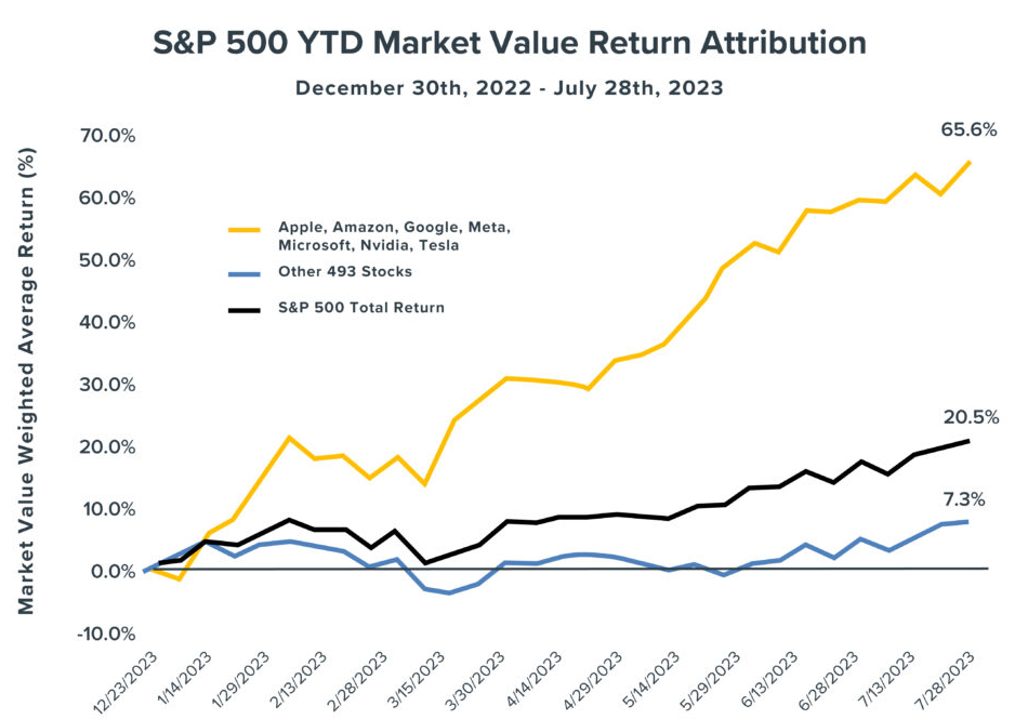
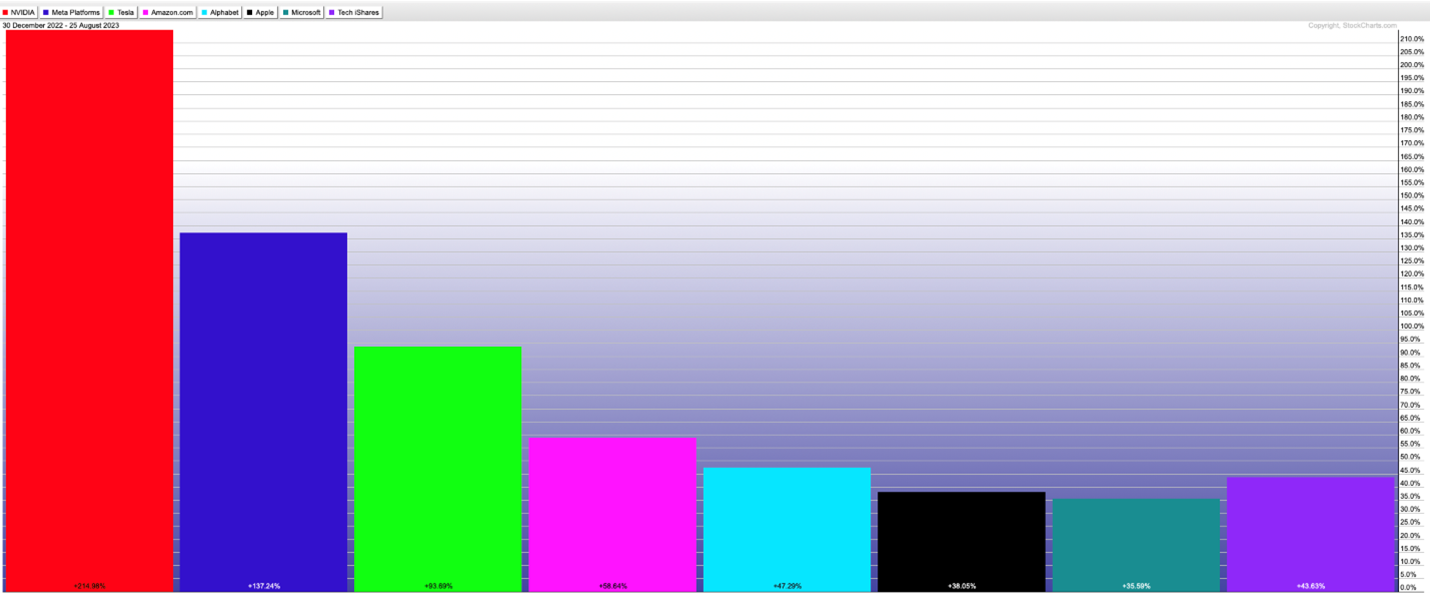
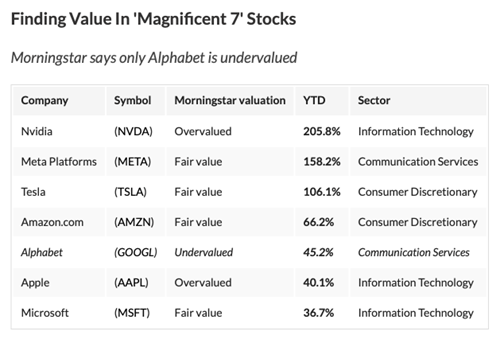
The current state of the financial markets shows a mixed performance across the various asset classes on a year-to-date basis through mid-June. While the S&P 500 and Dow Jones have experienced marginal negative price returns year to date, the NASDAQ has seen a notable positive return of 24.5% since the start of the year.  The breadth of the NASDAQ performance is very narrow with META, AMZN, AAPL, MSFT, GOOGL, TSLA, and NVDA accounting for most of the year-to-date price gains.  Bitcoin has displayed impressive gains with a year-to-date return of 63.7%, highlighting its appeal as a speculative, yet scarce asset class. This comes on the heels of a crash in bitcoin and other digital currencies after the FTX and related venture capital-backed scandals emerged in late 2022. Gold has provided a respectable return of 6.7%, reflecting its safe-haven status in times of economic uncertainty. Gold has been consistently seen as a stable store of value over time to which investors allocate more capital to during times of instability due to its real (physical) asset appeal and scarcity of supply. On the other hand, the S&P 500 Bond Index and the S&P 500 Real Estate Sector Index have negative returns of -2.2% and -3.1% which reflect the impact of rising interest rates and potential concerns within the commercial office real estate market. Overall, the high variability between the performance of the various asset classes year-to-date are signaling increased volatility in the real economy and the potentially divergent future paths for the economy and policymaking.

Source: Yahoo Finance https://finance.yahoo.com/

In contemplation of a possible recession, it’s important to discern the safest and most optimal asset classes for investment from a historical perspective. During recessionary periods, certain asset classes have historically performed better than others. For example, as seen on the historical returns data below, gold’s relative volatility, negative correlation to S&P 500, and general outperformance during recessionary periods can be seen clear as day. Another asset class that has historically performed well in recessions is fixed income securities that appreciate in price as interest rates are cut by Fed policymakers to spur the economy out of recession. The performance of certain assets can vary from one recession to another and as they say, “there are no guarantees of future performance.”


Note: Years marked with * symbolize recessionary periods

Source: TIAA Center for Farmland Research https://farmland.illinois.edu/

Government Bonds: Longer dated government bonds have typically been a great asset class to hold during recessionary periods. In times of economic uncertainty, investors tend to place a high value on the safety and stability of “risk-free” U.S. government bonds. Purchasing a bond essentially equates to you lending money to the government. They then pay you back interest and there’s little to no risk involved in bonds. Note the U.S government retains a very high credit standing among the various credit rating agencies. 

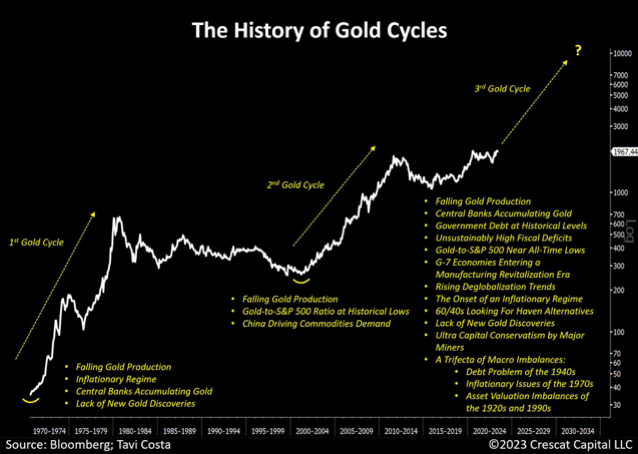
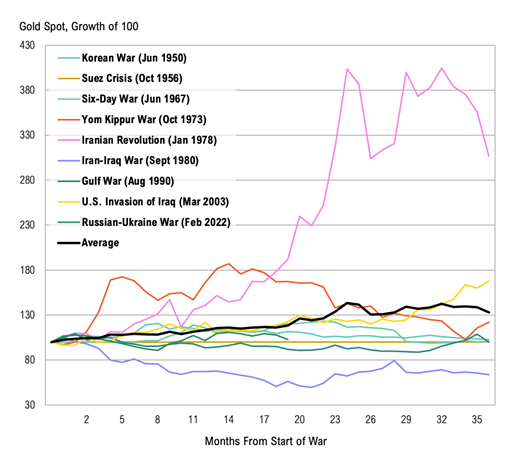
Gold: Precious metals such as gold or silver also perform well during recessionary periods because of their intrinsic value and perceived safe-haven status (much like U.S. treasuries). Precious metals are most often used as a hedge against inflation and economic uncertainty. During times of recession, gold has generally increased in value. Between 1973 and 1974, the stock market fell by roughly 25%. At the same time, the price of gold increased by roughly 70%. This trend likely happened due to more gold demand during times of financial instability for its real asset features. Since the demand increased at a faster rate than the supply (gold is a finite resource on earth), the price of gold goes up. This trend also comes up during the 2002 and 2008 recessionary periods. Gold is one of the most volatile assets historically driven by investor risk-on or risk-off mindsets.  Gold tends to be one of best performing asset classes during recessionary periods as investors flip to “risk-off” behavior. Macro investors at Crescat Capital believe the macro drivers today support the potential onset of another gold super cycle as depicted in the chart below:

Source: Otavio Costa

Cash: The phrase “Cash is King” couldn’t be truer during recessionary periods. Holding cash, or cash equivalents such as money market funds or short-term government securities, can provide stability and optionality during recessions. The dollar, euro, Swiss Franc, and yen all provide both stability and flexibility. During recessionary periods, highly attractive investment opportunities often arise out of the economic and market turmoil that emerges.  Investors with “dry powder” to deploy at the trough of markets typically generate highly attractive risk-adjusted returns.

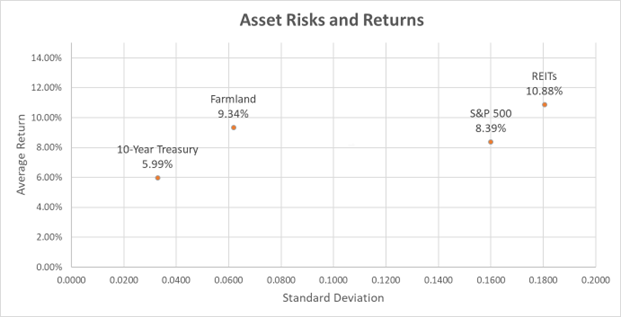
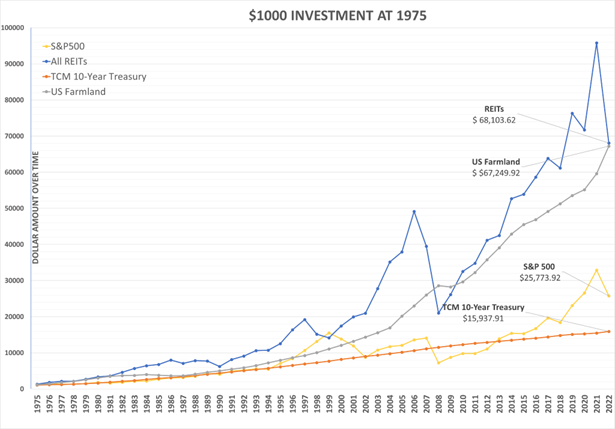
Farmland: Farmland has historically been an extremely stable and safe investment. It also typically performs well during recessionary periods due to the largely non-discretionary demand for agricultural products. Since farm production is essential for sustaining human life, people are always going to need food, no matter what the state of the economy is. The stable demand for food provides resilience in farmland’s cash flows and appreciation potential. Farmland is also a long-term investment and acts as a steady hedge against inflation.  Farmland and farmers get significant government support because of its strategic and political importance.  More global governments have been overthrown because of food shortages than any other political factor. Farmland also typically outperforms other assets such as gold or the S&P 500 on a risk-adjusted basis over long periods of time. 

Source: https://farmfolio.net/articles/why-is-farmland-a-smart-recession-proof-investment/

As we reach the halfway mark of 2023, the U.S. economy and investment portfolios face considerable uncertainties amid the potential for a recession. The current economic landscape shows striking similarities to past recessions with warning signs such as rising inflation and the Fed’s aggressive efforts to control it by hiking interest rates as well as labor shortages, government bailouts, bank, venture capital and commercial real estate failures, and other economic turmoil. Due to expectations of increased volatility in economic conditions in this transition from a long expansion period to a potential contraction, we recommend investors seek stability and security in their asset allocations. Asset classes such as treasury bonds, high quality fixed income securities from government and corporate issuers, short-term money market funds and cash equivalents, gold or gold miners, and farmland offer fixed and stable yields, liquidity, and resiliency during periods of economic transition and uncertainties. As we look to the future, we take comfort in knowing it’s not different this time because history rhymes.


Summer Road Trip

The summer season has officially begun and following in the footsteps of the Griswold family, you’ve decided to take a typically American road trip. But instead of a final destination of Walley World, your destination is a more durable investment portfolio as you suspect the wheels may come off the US economy this summer. Fasten your seat belts, get out your road map, and drive along as we explore some of the key points of interest (POI) for the U.S. economy this summer.

First POI: National Debt Ceiling

One POI that could cause you to reduce your cruising speed this summer could be the National Debt Ceiling. The media and public have been in a veritable frenzy over the past month about the National Debt Ceiling as the legislative and executive branches of government have until June 5th to reach a compromise on raising the national debt limit. The U.S. Government reached its $31.4 trillion debt limit in January however the Treasury Department has been using “extraordinary measures” and accounting tricks to avoid a technical default. The U.S. Treasury Department recently warned that if the ceiling were not raised by June 5th, the U.S. Government could default on its payment obligations to debt holders.

About $6.8 trillion of this debt is owed to other federal agencies such as the Social Security Trust Fund, the Federal Old Age and Survivors Insurance and Federal Disability Insurance Trust Funds, and the Military Retirement Fund. The remainder is held by the public. Among these public debtholders are U.S. banks, investors, the Federal Reserve, state and local governments, mutual funds, pension funds, and several foreign governments. Almost half of U.S. debt is held in trusts for retirement, meaning if the U.S. government ever defaulted, it could have far-reaching impacts on current and future retirees. Much like you, these retired workers are likely looking to hit the road in their RVs this summer.  Some sharp-eyed retirees may have foreseen this speed bump ahead and begun rethinking their travel plans.  Many have pulled over into the relative safety and comfort of a rest area; tired and frustrated that their retirement income lies in the hands of politicians jockeying to ride shotgun beside the Commander in Chief.

Source: The Balance Money

In addition to military leadership, the Commander in Chief holds primary responsibility for the conduct of U.S. foreign policy.  Stiffing your foreign lenders would be a steering error with potentially fatal consequences.  Japan, China, and the United Kingdom lead the line of geopolitical traffic cops, collectively holding over $2 trillion of U.S. debt. Japan and China’s large holdings of U.S. debt help support the value of the dollar as the global reserve currency and finance U.S. purchases of their relatively cheaper goods. The U.S. economy is one of the key global economies as most foreign countries have some trading relationship with the United States.  In addition, the U.S. dollar dominates global exchange markets, representing 90% of trading volume.  A U.S. default on its national debt would cause a major economic pileup and delays in global economic activity transmitted through the U.S. dollar-based global financial system. The U.S. maintained its AAA or equivalent credit rating by the major reporting agencies until the last debt ceiling crisis in 2013, when Standard and Poors downgraded the U.S. to an AA+ credit rating, citing political brinkmanship over raising the Federal debt ceiling.

Source: The Balance Money

Thankfully, legislators have reached a proposed deal that would lift the federal debt limit; however, the proposed legislation will do little to reduce the government spending that sped up during the COVID-19 pandemic. The package would suspend the borrowing limit until January 2025 along with limiting military spending growth to 3% and imposing limits on nonmilitary spending. Some other features of the deal include some cutting of funding for the Internal Revenue Service and a tightening of work requirements for the Supplemental Nutrition Assistance Program. The deal still needs to be approved by both the House and Senate before going to the Commander in Chief for his signature. At this juncture, it seems likely that these two backseat drivers will reach agreement soon enough to apply the brakes and avoid a catastrophic Thelma & Louis ending.

Second POI: Revisiting Cryptocurrencies

Next stop on our summer road trip, is a place we have visited before, cryptocurrencies. At the end of 2022, we discussed some of our key investment themes for 2023 with crypto assets making the list. Cryptocurrencies, such as Bitcoin and Ethereum, were on everyone’s POI list last summer.  However, the epic failure and fraud of one of the largest digital currency exchanges, FTX, halted many people’s crypto ride prematurely. The price of Bitcoin fell 65% last year but has it started to make a comeback? The short answer is yes however it has not yet reached its all-time high of 2020. Bitcoin is up 67% year to date with Ethereum following suit, rising almost 59% year to date. While crypto assets are increasing in popularity again after their self-inflicted pileup last year, many remain skeptical about whether alternative currencies are the safest route on the investment highway. Similar to old Route 66 that runs from Chicago, Illinois to Santa Monica, California, digital currencies have had several bumps, potholes, and dead ends across its history. Still, Route 66 remains a viable, albeit alternative pathway.  It has not been abandoned by more adventuresome travelers.  Inflationary pressures and a long history of fiat-based monetary accidents have venturous investors exploring these digital assets for diversification benefits as uncertainty looms around the U.S. economy and recession odds grow with the length of days. We expect to see more sensible government regulation in this space over time. The stakes have been raised with SEC cracking down on the popular trading and exchange platform, Coinbase, in April.  Congressional leaders from both sides of the aisle have been working on providing legislative clarity where the SEC has left a regulatory vacuum.  Cryptocurrencies may not be on everyone’s destination list this summer; however, we will be keeping a watchful eye on their route this summer.  The incessant drumbeat of global de-dollarization and circumventions of U.S. hegemony by U.S. allies and foes alike will be good fodder for economists’ ghoulish tales around summer campfires.

Third Stop: Energy Prices

From the air conditioning in your home to the gas tank filled up for that summer road trip, energy prices remain a stipulation in summer travel plans. Last year, energy prices, impeded many people’s ability to take that summer vacation or forced them to turn down the thermostats in their homes as the Russian-Ukrainian conflict put price pressure on oil and natural gas. Europe felt the brunt of spiking energy prices as its largest supplier of natural gas, Russia, shut off its pipes to countries supporting Ukraine in its war efforts. As a result, prices skyrocketed which sent shockwaves to energy consumers around the world. Thankfully, Europe pushed its populous to conserve energy, and, coupled with a mild Winter, the European Union was able to escape a possible pileup widely predicted this past winter.  Energy prices have largely stabilized along with the apparent stalemate in the Russia-Ukraine War with oil prices falling 7% and natural gas prices falling 42% since January 1st making your summer travel a bit cheaper going into the warmer months.

Fourth POI: Hospitality Industry

Our final stop is a look at the hospitality industry: the epicenter of summer travel season. The hospitality industry which includes hotels, bars, and restaurants took a major hit during the pandemic as restrictions and public fear kept many people locked down. However, the CDC recently lifted its Public Health Emergency as COVID-19 has become less virulent and more manageable from a public health perspective. This news couldn’t have been better timed for the hospitality industry as this summer is projected to be full of travel for Americans. A study conducted by Deloitte found that 50% of Americans plan to take trips this summer that include hotel or rental home stays along with many reporting they will be traveling internationally this year. As a result, bars, hotels, and restaurants are among the economy’s fastest-growing employers according to the Wall Street Journal. This hiring frenzy comes on the heels of increased consumer spending in April even though recessionary fears persist. Overall, much like this author, Americans seem to be making room in their budgets for that epic 2023 summer road trip making the hospitality industry one sector to watch this year.

“When all else fails, take a vacation.”  – Betty Williams

Hopefully, we’ve whetted your appetite for a summer road trip.  Let’s face it, our elected officials and central bankers are driving erratically and should get off the road.  Thankfully they’ll be on summer break soon, probably just as soon as they raise the debt ceiling.

There is an old Wall Street adage, “Sell in May and go away” that ties in well with this summer road trip theme.  Of note, we’ve tactically reduced Servant Financial model portfolios to the lower end of their risk tolerance range earlier this month to keep your summer road trip on track and carefree.  Although we cannot prevent government or Fed-induced market accidents from occurring, we can limit the portfolio damage.  With the S&P 500 trading at 4,200 and a rich 24 times last twelve-month price-earnings ratio (PE) and 19 times forward PE, selling in May and focusing on your summer vacation seems like a very sensible thing to do.

Contact us today to learn how you can keep your investment portfolios safely on the road this Summer.


Speeding Towards the E.R. – Economic Recession

Somebody Call 911, the U.S. Economy is Sick.

Ambulance sirens blare, doctors prepare, and the patient is on their way to the E.R. with little time to spare. The patient is the U.S. economy which is on its way into the E.R. – Economic Recession that is! Anxiously waiting for the wellness diagnosis are U.S. consumers, Wall Street investors, and analysts around the globe. A recession is defined as a “significant, extensive, and lingering period of economic downturn.” Some may argue that since COVID-19 we have been experiencing these symptoms as inflation persists and equity markets tumble. But who diagnoses a recession or determines economic well-being? The r-word has been tossed around over the past few years by Wall Street experts, media pundits, and struggling consumers but the entity that gets the final say is the National Bureau for Economic Research (NBER). Unlike the relatively timely results from your personal physician, NBER’s diagnosis can be painstakingly slow. It took 366 days for NBER to announce its recession conclusion after the 2008 financial crisis. That’s like sitting in your doctor’s office knowing you are seriously ill with common flu symptoms, yet the doctor will not accept the obvious diagnosis and prescribe anything until they rule out every other ailment first.

So, what’s the hold-up? Why does it take so long for NBER to call a recession? Much like doctors, several tests and conclusions must be drawn by NBER before a formal recession decision is made. NBER states “It waits until sufficient data are available to avoid the need for major revisions to the business cycle chronology.” Their goal is to not sound an alarm that could cause consumers and investors to make premature decisions before all the data is analyzed. In other words, NBER does not want to be the proximate cause of a recession.  The effects of a recession diagnosis can radiate through the economy and impact government policy decisions.   Accordingly, NBER takes its time to confirm a recession has occurred well after that conclusion has been universally accepted. Not only do they take their time calling a recession, but they also wait to confirm the economy has healed and an economic recovery has taken hold. It can also take more than a year for NBER to make the call of a recovery. See below.

Source: Newsweek

The symptoms of a recession can vary and are unique in each case. Many define a recession as two consecutive quarters of falling real Gross Domestic Product (“GDP”); however, NBER evaluates a variety of metrics before making the call. NBER analyzes data about labor markets, consumer spending, business spending, industrial production, and overall income. They take a more holistic approach to analyzing the economic situation rather than using a practical rule of thumb or threshold to trigger a recession diagnosis. So, let us look at the current vital signs of the U.S. economy.

Vital Sign #1: Gross Domestic Product

The U.S. economy’s GDP is a key benchmark of economic performance. GDP measures the value of the final goods and services produced in the U.S.  As an economic vital sign, typically a recession diagnosis is given when the economy’s GDP experiences two consecutive quarters of negative GDP growth. The economy experienced this already during the first half of 2022.  There was considerable debate in many circles about a recessionary call at that time given the one-time distortive impacts of COVID-19 preventive measures.  Consensus GDP projections for 2023  were for growth of around 2.5% in the first quarter. The Commerce Department announced on April 27th that GDP growth slowed to a 1.1% annual rate as consumers retrenched due to high inflation and rising interest rates.  Reported first quarter 2023 GDP marked a slowdown from inflation- and seasonally adjusted 2.6% growth in the fourth quarter of 2022 and 2.2% average annual growth in the 10 years before the pandemic. This rapid slowing in the U.S. economic pulse sets the stage for a potential recession in the second half of 2023 if this vital sign continues to deteriorate.

Vital Signs #2, #3, and #4: Inflation, Federal Reserve’s Monetary Policy, and Bank Instability

While persistent inflation is not necessarily a sign of recession it can be the first domino to fall in a series of economic drivers. Inflation has been causing the United States economic discomfort for the past year and its peak of over 9% was like a sharp pain in the gut of the U.S. economy. Chronic inflation caused the surgeons at the Federal Reserve and U.S Treasury to grab their scalpel and open up the patient to take a closer look. In last month’s article entitled Jeromeggedon and Calamity Janet, we highlighted the banking and economic trauma caused by the sheer force of the Fed’s aggressive rate hiking campaign and the potential damage to the banking system, a lifeblood to the U.S. economy. This aggressive monetary policy has caused the yield curve to invert which is a telltale sign that the patient isn’t well, and it is a reliable signal of an oncoming recession. Typically, banks profit on the spread between longer-term assets and the interest paid on short-term liabilities such as bank deposits.  However, if the yield curve is inverted, bank profitability is problematic. As a result, banks may have to lessen their lending activities which can reduce economic growth. Moreover, today banks can deposit their excess reserves at the Federal Reserve and safely earn 5% on the Federal Funds Rate. This further depresses bank lending.

The inverted yield has already caused a few banks to collapse that anticipated inflation to be “transitory” after comments made by Fed Chairman, Jerome Powell in 2021. However, inflation persisted causing the Federal Reserve to aggressively hike interest rates.   This caused long-duration securities to fall in value, taking Silicon Valley Bank down with it. Concerns surrounding bank stability have arisen and depositors have already started to reduce their bank deposits below the FDIC’s $250,000 insurance limit. The fallout from the banking crisis has economists and the Federal Reserve cautioning that a recession is probable later this year. Not everyone agrees about the potential unhealthy condition of the banking system as the Vice Chair for Supervision, Michael Barr, said the banking sector “is sound and resilient.” While there are multiple opinions about the diagnosis and prognosis of the US economy, the banking sector should at least be considered an acute care patient and continue to be closely monitored.

Vital Signs #5 and #6: Consumer Spending and Unemployment Levels

“It’s a recession when your neighbor loses his job; it’s a depression when you lose your own.” – Harry Truman. But what would President Truman have to say about an economy that is experiencing some of the lowest unemployment levels ever, but the central bank is signaling a recession beginning later this year? Consumer spending has not appeared to be slowing much even as recession fears among economists persist. Retail spending jumped 3% from December 2022 to January 2023.  Yet the consumer appears to be leveraging future income to meet consumption as consumer debt levels have reached historic peaks.  And while its growth has tapered a bit in recent months, household debt is projected to reach the highest value in history with the personal savings rate also declining after hitting its pandemic high at almost 35%. Credit card debt is at an all-time high with U.S. household credit card debt reaching $986 billion in 2022, a 15% increase from 2021. While some see this metric as a strength of consumer sentiment, others believe that Americans are having to put more and more on credit cards to keep up with rising prices and wages that have stagnated.


Source: SP Global

Some people may look at consumer spending and wonder when consumers will start to crumble and begin reducing their consumption and spending. However, the continued strong economic outlook for the job market has some wondering if a change in consumer behavior will even happen. Historically, recessions are characterized by weak job markets and subsequently reduced consumer spending. However, this is not the type of labor environment we are experiencing right now. With an unemployment level hovering just above 3% and consumer sentiment scores still strong, American workers remain confident in their job security and ability to maintain income and spending levels. Consumers who are confident about their job prospects and income level will likely continue to spend and finance purchases on credit cards.

The strong job market has been an important vital sign for consumers however it has been to the detriment of many employers. “Help Wanted” signs continue to be posted in a variety of businesses from retail to finance and technology. Companies are having a hard time filling open positions and coupled with continued supply chain lags, their production has slowed. This fact has many economists intently focused on government and private market reporting on employment statistics, watching closely for early symptoms of illness in the job market.

The Prognosis and Prescription

So, what’s the overall prognosis for the U.S. economy? Will the old adage “an apple a day keeps the recession away” hold true in the upcoming year? Both the Federal Reserve and economists have signaled the economy is likely to enter a recession within the next 12 months.  Many economists, like physicians often do, put a little sugarcoating on their messaging using terms like “mild” or “treatable”  The most up-to-date leading economic indicators from The Conference Board point to a 99% likelihood of a recession over the next year with the root causes stemming from the Federal Reserve’s interest rate hikes and tightening of financial conditions within the banking sector. The Federal Reserve has predicted a mild recession to begin later this year with a recovery happening over the next two years.

Investors have been watching recession vitals closely and some argue that recessionary fears are already priced into the market. We believe this market is at historically high relative valuation levels and is priced for an economic soft-landing or shallow recession rather than the median historical recession.  The S&P 500 for example has continued an upward trend since January even as recessionary fears grew.  This U.S. large cap valuation index has moved higher mostly on the back of a handful of large technology names.  Further, while earnings expectations for 2023 have come in, they are only showing a mild earning contraction over 2022 which would be a highly favorable outcome for the typical recessionary period.

Given this prognosis, we lowered risk elements across Servant client portfolios by lightening up allocations to a) equities and b) inflation hedges earlier in April.  Proceeds were deployed into short-term treasuries and high-quality corporate bonds.  Note we were conservatively positioned across investor risk profiles prior to these tactical moves.  These trades further increased our equity underweight.

We trimmed allocations to Distillate U.S. Fundamental Stability & Value ETF (DSTL) by a third and deployed proceeds into iShares iBonds December 2024 Term Treasury ETF (IBTE).  We also swapped allocations to iShares 0-5 Year TIPS Bond ETF (STIP) for Invesco BulletShares 2026 Corporate Bond ETF (BSCQ).  The STIP inflation hedge has played its important portfolio buffering role well as inflation moved from “transitory” to “chronic” in Dr. Powell’s medical charts.

The motivation for the equity trimming is purely a function of stock market valuations rising into a deteriorating economic backdrop, creating an even more unfavorable risk/return set up.   We continue to believe that crucial pillars to the economy and markets are trending in the wrong direction and opportunities for a smooth transition out of elevated inflation are running out of time. Issues in the banking system may also cause further economic disruptions at the same time the elongated negative real wage growth cycle for consumers will ultimately force real spending to slow.

In short, the stock market is priced for mild or “transitory” case of economic recession in line with Fed speak while we are discounting the downside case that the economy is speeding towards the E.R. with potentially more acute or “chronic” conditions.

Jeromeggedon and Calamity Janet

“Guess what guys, it’s time to embrace the horror! Look, we’ve got front-row tickets to the end of the earth!” This month’s collapse of Silicon Valley Bank (SVB) had many of their well-heeled venture capitalist depositors and customers metaphorically reliving this scene from the 1998 movie, Armageddon. SVB’s downfall had people questioning if we are headed for another epic crisis in the banking system like that experienced in the 2008 Global Financial Crisis punctuated by the failure of Lehman Brothers. On March 8th, SVB announced a $1.8 billion loss on its investments in long-term treasuries prompted by depositors withdrawing funds. Withdrawals soon snowballed as general partners at venture-capital firms began pulling their money out of Silicon Valley Bank and urged their portfolio companies to do the same. Hours later, Moody’s downgraded SVB Financial triggering its stock price to crash sending shockwaves reverberating throughout the banking system. $52 billion in the market value of JP Morgan Chase, Bank of America, Wells Fargo, and Citigroup was lost as panic spread about the safety of banking deposits, particularly deposits over Federal Deposit Insurance Corporation (FDIC) insurance limits of $250,000. Two days after the initial announcement, the FDIC took control of SVB after depositors attempted to withdraw $42 billion. On March 12th, the New York Department of Financial Services regulators announced the 3rd largest bank failure, Signature Bank.  Signature Bank was one of the few banks accepting crypto deposits; some believe this made them an easy regulatory target. SVB’s failure prompted Signature Bank customers to move their depository funds to larger systemically important banks, like JP Morgan Chase and Citigroup, as concern rose surrounding its portfolio which was very similar to SVB’s.  Systemically important is the code for “too big to fail banks” that the Federal government will likely step in and save in a full-blown crisis.

Panic and concerns surrounding the U.S. banking system sent shockwaves from large banks down to your local community bank known for giving out lollipops for new deposits or transactions. $165 billion in losses of market value were experienced among the 10 biggest bank stocks and $108 billion in losses were incurred among small bank stocks according to the Federal Reserve. Concerns began to arise that we were in for another collapse of the banking system as the closure of SVB marked the 2nd largest bank collapse ever and the largest since the 2008 Global Financial Crisis.  Many experts wondered aloud whether SVB was analogous to a Lehman moment within the technology sector centered around Silicon Valley and San Francisco.

Image Source: Fox Business

The Downfall of Silicon Valley Bank

So where did SVB go wrong? As the name suggests, Silicon Valley Bank was a preferred bank for many tech start-ups and venture capital firms. The bank saw substantial growth during the pandemic as the technology sector was booming and venture capital money was raining down on VC startups, minting hundreds of Unicorns – VC startups valued at $1 billion or more. SVB invested the flood of deposit funds into treasury bonds, mortgage-backed bonds, and other long-dated assets which provided SVB with a larger interest spread over the interest SVB paid to its depositors in the low-interest rate environment during the pandemic. The Federal Reserve monetary and interest rate policy decisions and long-term guidance encouraged this behavior as Fed Chairman Powell labeled incipient inflation “transitory” in 2021.  But as inflation continued to rise into 2022, the Federal Reserve was ultimately forced to hike interest rates very aggressively.  The yield curve eventually inverted as long-term interest on 10-year treasuries fell below those offered on 2-year treasuries.  Consequently, the long-duration securities that SVB purchased to back its deposits fell substantially in value, something on the order of 25%. In accordance with accounting rules and the regulatory framework for banks, SVB had counted on the fact that they would hold their investments until maturity and did not recognize the mark to market impact of higher interest rates in its financial statements.  These held-to-maturity securities were carried at cost on their balance sheet until they could no longer be “held.”  Sophisticated depositors caught wind of this shadow accounting issue with SVB’s announcement of a $2 billion equity capital raise.  Deposits were rapidly withdrawn causing a forced sale of these long-term securities and creating large realized losses.

SVB had also been facing a general slowdown in the venture capital funding cycle and deposit taking. Venture capital investments are far less attractive when the cost of capital rises with interest rates.  It’s far easier to finance these ventures that do not cash flow for several years, maybe a decade or more, at zero interest rates, but it’s a completely different ballgame with the Federal Funds Rate at 5.0%. Funding across the venture capital space slowed meaningfully and deposits to the preferred depository institution began to shrink massively.  Moreover, these cashflow-burning startup enterprises continued to rapidly withdraw money for payroll and operational expenses. The Federal Reserve’s wild misjudgment on inflation and subsequent unprecedented rapid hiking campaign fomented the destructive conditions for a life-or-death decision between the safety of deposits and SVB’s insolvency, or Jeromeggeden.   The Federal Reserve had effectively financially engineered this textbook run on Silicon Valley Bank by its policies. Many sophisticated investors had long ago concluded that the Fed would keep hiking interest rates until they broke something. Technology-sector concentrated SVB proved to be the weak link and the first domino to fall.

The big question is how many other banks will be caught swimming naked on interest rate risk management now that the banking deposit tide is going out. This banking cycle is a foreseeable consequence of Fed monetary policies. Remember under quantitative easing (QE), the Federal Reserve printed dollar reserves and used those reserves to take U.S. treasuries and other government-backed securities out of private hands. These excess reserves generated by QE are now trapped in the U.S. banking system. Depositors are being rational economic actors and withdrawing bank deposits and buying money market funds that hold U.S. treasuries.  With money market funds yielding 4.3% today, this deposit withdrawal cycle may be largely irreversible.  The Fed should be accelerating its wind-down of its U.S. treasury holdings to soak up the wave of private demand for treasuries.

The Federal Reserve’s Response

The fears around the financial stability of the banking system had investors and consumers alike calling for a slowing of Federal interest rate hikes. Investors and banks alike had already been questioning Chairman Jerome Powell on the timing (too late to start the hiking cycle) and pace (too fast hiking because playing catchup) of their policy decisions. Judgment day came on March 22nd when the Fed announced another 0.25% rate increase making it clear their priority was combating inflation despite growing fears about the stability of the banking system. The rate hike prompted banks to lose further equity value both domestically and in Europe, causing unease that the Fed’s decision could cause additional damage to the already wounded banking system. Mr. Powell said that “depositors should assume that their deposits are safe” as the government plans to impose further regulations on an already heavily regulated industry. This “watch and see what happens” approach was small comfort and hasn’t given bank depositors in non-systematically important banks that warm and fuzzy feeling about the safety of their deposits. Deposit withdrawals at regional and small community banks continued apace.

Will the Large Banks Keep Getting Larger?

The resulting crisis has depositors and banks alike looking to the FDIC and U.S. Treasury Secretary, Janet Yellen for guidance. Yellen commented at a Capitol Hill hearing that the FDIC will cover the uninsured deposits (excess of $250,000) of both SVB and Signature bank, yet there is great uncertainty if this policy decision would apply to other bank depositors in the future. Yellen publicly said shortly after the SVB collapse that the FDIC could cover depositors whose funds exceed the $250,000 limit.  However, when questioned if all banks would receive this treatment at the Congressional hearings, Yellen’s response appeared to suggest that small and midsized banks would be left out. The calamity caused by Yellen’s comments was highly disruptive for many smaller banks as it prompted businesses and individuals to contact their local community banks about transferring their depository funds to larger banks that Yellen said would be protected.  This was a surprisingly dismal show of confidence from the U.S. Treasury Secretary who once proclaimed in 2017 as Fed Chairman “I don’t see a financial crisis occurring in our lifetimes.”

From March 8th to March 15th, $110 billion flowed out of small banks into larger banks. Small banks account for just 34% of deposits in the U.S. banking system; however, they account for a substantial portion of commercial real estate loans sitting at 74% of total loan activity. Like the iconic Bailey Building and Loan from It’s a Wonderful Life,  these small community banks lend out deposit funds to Main Street America borrowers for local commercial real estate projects or businesses. If deposits to small banking institutions continue to contract, then this would reduce capital available for commercial real estate lending. Small banks often work with borrowers whose needs are more specialized or whose funding needs are too small in size for the larger banks in America to consider. For example, according to the American Banking Association, a majority of agricultural lending is done by small and mid-sized banks that have deep roots in their rural communities. Farm loans require specialized analysis and training that not many large banks possess. If depositors pull their money from these small institutions, this could affect the availability of capital for agricultural lending, small business lending, and lending to underserved/underbanked communities.

While concerns surrounding the U.S. banking system have merit, the situation Silicon Valley Bank found itself in was somewhat unique. Nationwide, 45% of all deposits in the United States banks are uninsured; however, at SVB almost 94% of their deposits were uninsured. To stem this evolving bank liquidity crisis, the Fed created a new program to administer additional funding called the “Bank Term Funding Program,” (BTFP). Through this program, banks would be loaned funds if they pledge U.S. Treasury securities, mortgage backed securities, and other collateral. The result would be potentially transferring the risk of bank losses from the bank to the federal government. Through BTFP, the Federal Reserve apparently will provide liquidity to the borrowing bank may give loans based on the par value/cost of the securities rather than its depreciated market value.  In other words, they moved the shadow accounting for unrealized losses to the Fed’s balance sheet.

Safety of the US Banking System

Despite ongoing concerns surrounding the stability of the U.S. Banking system and another potential banking crisis similar to 2008, most economists believe that the U.S. Banking system is sound. On a broad scale, U.S. Banks are solvent overall and are not at a high risk of systematic failure or collapse. While rapid interest rate hikes have caused more severe fluctuations in capital flows in higher interest rate sensitive sectors of the economy, like technology and banks concentrated on that sector, we would expect that most large banks have well-risk-managed investment and lending portfolios and show more of diverse depositor base among sectors. Silicon Valley Bank appears to be a unique case of a large bank that did not properly manage the interest rate or duration risk of its investment holdings and Federal regulators were found asleep on the job again. Small community or regional banks may struggle to diversify their portfolio from a geographic standpoint however their focus gives them the ability to lend to a wide array of small businesses such as farms, retail, commercial property, and others. The investment portfolio of these smaller banks is closely watched by bank regulators as they serve such a large percentage of the total loan volume.

Policy actions and statements from the Fed’s Jeromeggedon and Treasury’s Calamity Janet have many Wall Street economists forecasting the U.S. will be in a full-blown recession by the second half of 2023, potentially forcing the Fed to pivot and begin lowering interest rates. Servant Financial client portfolios continue to stay overweight cash and fixed-income securities relative to strategic risk targets. The Federal Open Market Committee’s (FOMC) decision to raise the Fed funds rate by 25 basis points last week shows that the Fed is prioritizing its “stable prices” mandate over financial stability. We believe this policy decision will ultimately lead to increased financial instability while heightening inflation risk.  As such, we are maintaining underweights to equity and credit risk and healthy portfolio allocations to precious metals and other real assets.

Based on the FOMC’s subsequent actions, we plan on adjusting risk allocations once financial instability and recession risks have been fully repriced.  We expect the Fed will be forced to abandon its inflation fight and lower interest rates materially in the coming quarters. For now, we are advising clients to remain the rational actors that all economists expect us to be. For our portion, that means getting paid to wait by holding excess cash in money market funds with better yields from short-term investment-grade bonds. For example, the Fidelity Government Cash Reserve money market fund (FDRXX) yields 4.3% as compared to just 0.7% more in yield (5.0%) for a high-quality bond fund with a 6-year duration.  This short-term positioning greatly reduces the risk of taking a wait-and-see approach to the rapidly evolving macro, policy, and market backdrop.

Keep it simple with money market funds for your liquid savings as well or keep it local if you can.   Consider maintaining savings accounts or bank certificates of deposit (CDs) of 6 to 12 months at multiple local banks in support of your community. CDs, like checking or savings deposits, are only FDIC-insured up to $250,000 but are now offering rates from 4% to 5%. Ultimately, it is important to do business with people you trust and places you know will be there when you need them. Have conversations with your local banker to find out how protected your money is. Shop around, this is a saver’s dream after nearly a decade of near-zero interest rates.

Disclaimer: This is not investment advice and should not be used in the context of forming an investment portfolio. See your investment advisor or talk with Servant Financial today about how these factors affect your portfolio.


Russia and Ukraine… One Year Later

By The Numbers

One year ago, the lives of millions of Ukrainians were uprooted, and many more lives around the world were indirectly impacted by the Russian invasion of Ukraine.  The human toll alone has been considerable.  As it stands today, 8,000 civilians, between 175,000 and 200,000 Russian soldiers, and between 40,000 and 60,000 Ukrainian military members have lost their lives in this crisis. More than 8 million Ukrainians have fled their country.  This is equivalent to the population of the Chicago Metropolitan Area being forced to flee their homes. The largest group of refugees are women and children.  A further 6,000 Ukrainian children have been taken to refugee camps and facilities in Russia, subject to Russian re-education.

The United States government has provided $68 billion in total economic support with $29.8 billion of that being direct military aid and the rest being humanitarian assistance and economic support. The White House is requesting an additional $37.7 billion in aid in the coming year. The U.S. has given more military aid than any other country; however, the European Union (EU) leads in financial support at $30.3 billion provided to Ukraine within the last year. On the Russian side, communist-led Venezuela, Sudan, Cuba, and Nicaragua have all pledged their allegiance to Russia. While the U.S. has not confirmed China giving direct military aid to Russia, Chinese authorities do not deny their willingness to support their communist ally.


Source: CSIS

In addition to the horrific human toll, the war has also caused a wide swath of economic damage, sending shock waves to financial markets, agricultural markets, energy markets, and world economies. The outcome of the war is still largely unknown as concerns continue to be raised about Russia’s potential use of tactical nuclear capabilities and the uncertain form of Chinese support for Russia. Russia recently suspended its participation in the last remaining nuclear arms deal with the U.S., the 2021 extension of the START treaty (Strategic Arms Reduction Talks).  Russia can now begin expanding its nuclear weapons inventories.  One year ago, some speculated that Russia would swiftly overtake Ukrainian armed forces, but Volodymyr Zelenskyy and his army have proven their mettle in fighting off close to 320,000 Russian soldiers. While the results of this brutal fight are still hanging in the balance, we will now look back at how this conflict has disrupted global markets.

Agricultural Impact

Agriculture generally flies under the radar for many investors and consumers as a sufficient food supply is generally taken as a given, particularly in the developed West.  However, the invasion shed light on the tenuous nature of global food and commodity supply as the stomping of Russian boots on Ukrainian soil was felt from the sunflower fields in Ukraine to the amber waves of grain in the United States. Agricultural commodities such as wheat, sunflowers, corn, and soybeans all depend on the trifecta of fertilizers for plant growth: Nitrogen, Phosphate, and Potash. While the United States is not significantly dependent on Russia for imports of these vital crop nutrients, Brazil and other agricultural-producing countries import a significant portion of their fertilizer needs from Russia and its allies in China and Belarus. The fertilizer pressure globally has sent fertilizer prices skyrocketing with energy, seed, and financing costs for farmers also following suit. Input prices increased 20-30% for U.S. farmers in just one year as Brazil and others scowered the global market for alternative sources of supply. Global fertilizer prices remain firm and/or continuing on an upward trend.

Source: Farmdoc Daily

On the flip side of rising fertilizer prices, agricultural commodity prices have generally offset these rising input costs with corn, soybeans, and wheat prices all hitting 8-year highs in the past year. A relatively favorable growing season for much of the corn belt meant strong net farm incomes across the United States. Prices for agricultural commodities however have begun to fall off recently as the world has begun to adjust grain and input risk premiums to discount expected war outcomes with the war at a seemingly painful stalemate.

Globally, Ukraine supplies the world with 30% of the world’s sunflower and its byproducts (oil and meal). It is also a significant producer of corn, wheat, barley, and rapeseed. The conflict has brought about many uncertainties about whether the fields in Ukraine will be turned into battlefields or if they can produce a crop, will there be open ports for them to take their harvest to for export to global markets. Speculation about the war’s impacts on agriculture production are ongoing; however, if the COVID pandemic and Russia-Ukrainian war have taught us anything, it’s that regardless of what is happening in the world and whether there is war or peace, people still need to eat.

Energy and Financial Markets

Investors have been riding a wave of economic turmoil throughout the last year as the Russian ruble tumbled early on against the US Dollar and then climbed the mountain upward as capital controls and petrodollars came in. The ruble began to sell off once again when US and EU energy sanctions threatened a stranglehold on Russia’s critically important energy and gas business. Crude oil has been volatile as a result of the war with the oil price peaking at $128 last March after the Russian invasion began. Importantly, Russia is Europe’s largest oil exporter and although sanctions have been placed on Russia from the West, Russia has been able to re-direct most of its oil sales to China, India, and Southeast Asia. Natural Gas has been subject to similar turmoil as Europe was one of the main customers of Russian natural gas through the Nord stream gas pipeline system. Europe imports 83% of its natural gas and the war has brought about additional sanctions on Russian gas imports impacting the price European consumers pay for heat and energy. Europe has been forced to find new import partners such as the U.S., Qatar, Nigeria, Norway, and Algeria to keep people’s homes heated and the lights on.

Source: exchangerates.org.uk

A stock market repricing for a looming recession or economic slowdown and the Federal Reserve’s ongoing fight against inflation have eaten up investors’ returns over the last year.  However, there are sectors of financial markets that have profited from the Russian-Ukrainian conflict. Aerospace and defense stocks are up 11% in past year according to a subindex of the S&P 500. Commodities and raw materials have also remained strong as both sellers of agricultural products and energy commodities benefitted from higher prices and the uncertainties about a region that produces 14% of the world’s energy (Russia) and is a leader in sunflower oil, corn, and wheat production (Ukraine). Price pressures and volatility will remain in global commodity markets until the conflict is resolved. Amundi, Europe’s largest asset manager, says the probability of a long, drawn out war is up to 30%.

Source: WSJ

Global investors have been adjusting their strategic asset allocations for these geopolitical uncertainties and attempting to benefit from strong commodities and defense stocks. The uncertainty surrounding how the U.S. will respond if Russia deploys tactic nukes has some speculating around domestic defense stocks.  Some also believe military spending may be in a secular uptrend as U.S. munitions and defense equipment inventories have been depleted and the White House begins saber rattling against the Chinese.  The military industrial complex will likely adopt Rahm Emanuel’s approach by “never letting a serious crisis go to waste” to push their military spending agendas.  For those looking to go long a secular defense spending spree the iShares U.S. Aerospace and Defense ETF (ITA) has a low expense ratio of 0.39% with concentrated exposure in defense companies such as Raytheon (21.4%), Lockheed Martin Corp (16.14%), and Boeing Co (7.42%) among others. ITA is not cheap; however, as it trades at 24 times projected 2023 net earnings with a dividend yield of 1.4%.   For more a narrow, internationally focused play, BAE systems (BAESY), has experienced strong growth over the past year as Europe’s leading defense contractor.  BAESY trades at a more modest 18 times trailing earnings and yields 3.0%.  Generally, the stock has benefitted from higher military spending which doesn’t seem like it will be tapering off anytime soon.

How the Russia-Ukrainian war will end is still highly uncertain; however, it is clear that sadly global markets will be actively repricing its extended effects long after the last solider leaves the battlefield.


Where Have All the Good Workers Gone?

Reminiscent of the 1984 Bonnie Tyler hit from Footloose, many US employers are crooning for working class heroes. “I need a worker, I’m holding out for a worker ‘til the end of 2023.” The U.S. labor force has been dwindling from food and beverage service to financial analysts since the COVID-19 pandemic began. While some have been quick to blame the shortage on several rounds of government relief money that idled some workers, a combination of factors is influencing this labor change. Millions of people were suddenly unemployed at the start of the pandemic and many industries assumed these people would return to work when normalcy resumed. However, almost 3 years after the start of the pandemic, these “missing” workers may never return to the labor force. This labor shortage could cause a secular shift in American businesses and labor markets.

COVID-19

Government and businesses’ responses to COVID-19 brought about a 50-year high in unemployment, peaking at 14.7% in April 2020. Service workers and business professionals found themselves suddenly without work and wages. The U.S. government came to the rescue, handing out $5 trillion in pandemic stimulus money with a large portion devoted directly to individuals in the form of stimulus checks and extended unemployment benefits. When evidence of a growing labor shortage emerged, many people pointed fingers at the U.S. government for providing so much monetary support and disincentivizing workers to return to the job market. However, the story isn’t that simple. Fears of contracting and spreading COVID and the existential risk of mortality created a widespread shift in lifestyle priorities and an increased desire for a better work-life balance. The result of these factors has been the rise of remote labor and gig workforces. A study done by the U.S. Chamber of Commerce found 91% of survey participants hoped they could continue to work remotely at least part of the time. Businesses have generally adapted to this desire and been accommodative.  However, remote labor isn’t really a possibility for customer-facing service roles or manufacturing jobs for which labor activities are concentrated in a single location.

The U.S. Labor Department reported 10.5 million job openings in November 2022 with the labor participation rate at 62.3%, down from 63.3% in February 2020. Not only do service industries have their “Help Wanted” signs out but so do financial services and professional and business services. While workers are demanding more remote work, these professional industries are demanding people come back to work in their office buildings to collaborate with their colleagues. Workers have been less receptive to this return to the office mandate causing worker turnover rates to reach 57.3% in 2021, up from 45% just two years earlier. Businesses that have been able to accommodate their workforce’s desires for at least partial remote work are generally experiencing lower turnover and avoiding severe labor shortages.

No More Baby Boomers

Economists argue that this labor shortage was always on the demographic table. The labor participation rate has been on a downward trend since 2000 and some argue it is as simple as the laws of supply and demand. One of the largest generations in U.S. history, the Baby Boomer generation, is clocking out with no plans to punch back in. The median age of the Baby Boomer generation (born 1946-1964) turned 66 last year meaning many boomers are taking a refrain from Johnny Paycheck’s 1977 hit song, “Take This Job and Shove It” and checking into retirement. The next generation behind the boomers, Generation X, is about 5 million people short to fill the employment hole the boomers are leaving. The next generation able to take the Boomer’s place is the Millennials; however, it is still going to be several years before they enter the labor force. COVID-19 only intensified Boomers leaving the workforce as older generations were more susceptible to adverse outcomes from the virus. Boomers were also less likely to adapt to changes toward more remote work.  This trend may have something to do with the adage of old dogs and new tricks.

Source: Statista

These trends in labor demographics are not likely to be resolved any time soon as the World Bank projects the number of people between the working ages of 15 and 65 is set to decline by 3% over the next decade. “Without sustained immigration or a focus on attracting workers on the sidelines of the labor force, these countries simply won’t have enough workers to fill long-term demand for years to come,” said the chief economist at Indeed. Historically, immigration and globalization have helped bridge the labor gap; however, during the pandemic we saw a reversal of both trends. Policy reform towards immigration will need to happen if the U.S. wants a sufficiently dynamic labor force in the years to come.

Is the End in Sight?

The question begs, how long will this domestic labor shortage last? While a body of evidence suggests this is a systematic change, other economists argue a potential shift into a recession could help lower demand for labor and bring the labor situation towards equilibrium. The shifting landscape of the U.S. economy toward a recession would likely reduce hiring levels as companies are forced to cut back on growth plans. While we may see an uptick in unemployment levels, it is doubtful it will reach the near 10% unemployment levels the Great Recession of 2008 brought. The looming recession and persistent inflation point to a normalization of the labor market in 2023; however, some companies are still going to need to make adjustments to their business models to compensate for the loss in workers.

Companies are beginning to readjust their hiring strategies and their job expectations to accommodate the current labor market conditions. Inflation has made it difficult for companies to keep pay scales in line with the cost-of-living increases. It is going to be increasingly important for companies to be proactive with their employment strategies and stay ahead of the trends in worker lifestyle demands if they want to retain good talent. Companies such as IBM (Ticker: IBM) predicted this shortage long ago and began outsourcing their talent to countries with growing populations such as India. They have been able to capitalize on lower market-based wages in these developing countries and cheaper input supplies.

Meanwhile, the technology sector is busily working on solutions to these labor shortages, like artificial intelligence and machine learning.  The most recent market hero in this space is ChatGPT from the venture firm OpenAI.  ChatGPT optimizes language models for dialogue. The ChatGPT model has been trained to interact with users in a conversational way. This format makes it possible for ChatGPT to answer follow-up questions, admit its mistakes, challenge incorrect premises, and reject inappropriate requests. Several in the Twittersphere claim that ChatGPT has passed portions of the Bar Exam, medical license exam, and MBA operations exam. Further, experts interviewed by UK’s Daily Mail believe ‘AI will take 20% of all jobs within five YEARS’ and explain how bots like ChatGPT will dominate the labor market. According to the article, Microsoft invested $10 billion in ChatGPT and said that the technology will change how people interact with computers.

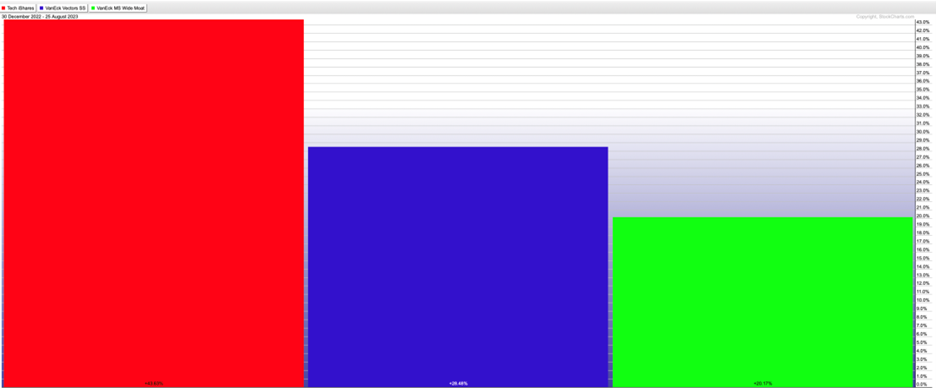
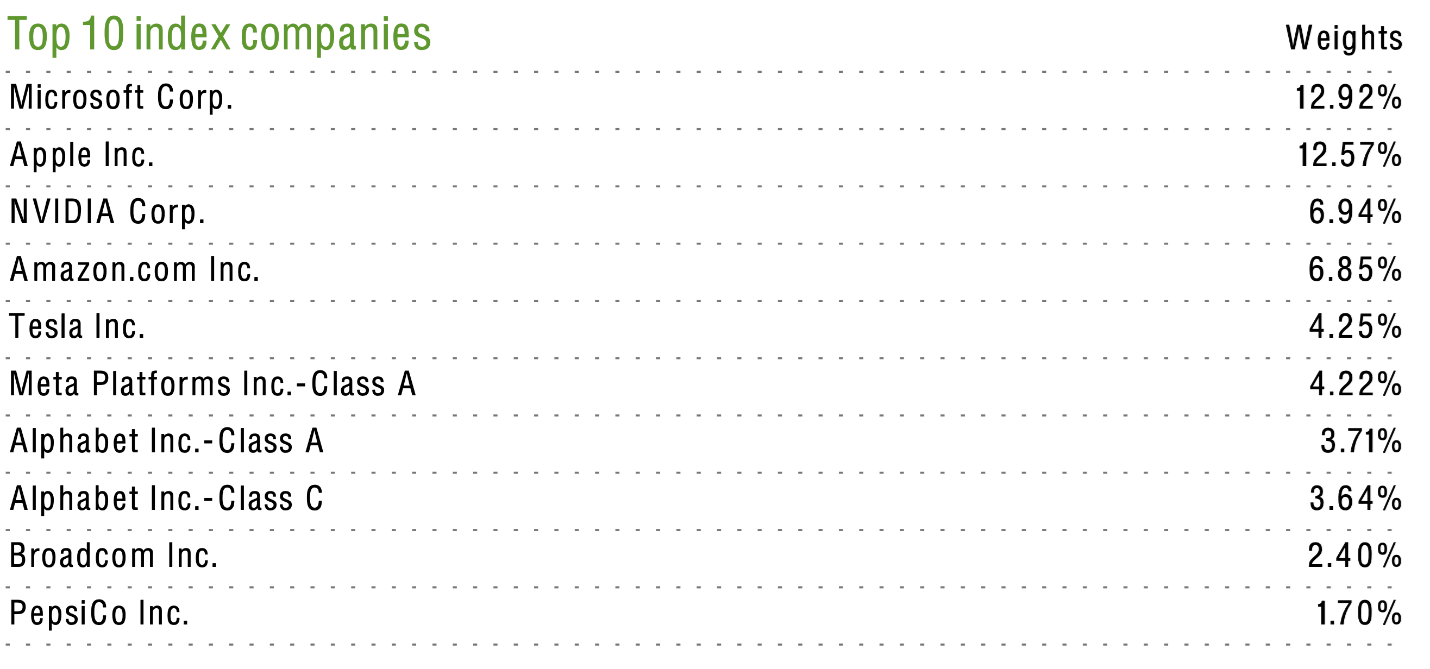
From our standpoint, the best way for investors to express a purposeful view on the future emergence of artificial intelligence and machine learning is through the leading technology heros, like Microsoft and Apple, who have massive distribution capabilities through their existing software and hardware product suites and business relationships across sectors. We like iShares U.S. Technology ETF (IYW).  This ETF provides exposure to the leading U.S. electronics, computer software and hardware, and IT companies.  IYW’s boasts assets under management totalling $7.8 billion and a reasonable expense ratio of 0.39%.    IYW has traded down 35% in 2022 and trades at an estimated 2023 price to earnings ratio of 23 times.  The following summarizes IYW’s top holdings:

We recommend buying IYW on future weakness and sitting on the sidelines holding out for a hero ‘til the morning light. In other words, wait until the next recession and buy these tech heroes who are strong, fast, and fresh from the fight.

white-arrow